The Rachel Carson Center
The Rachel Carson Center for Environment and Society (RCC) is an international research center dedicated to the study of environment and society from a wealth of different disciplines and international perspectives.
The RCC’s mission is to advance education, research, and international cooperation in the field of the environmental humanities and social sciences. It contributes to public and scholarly debates about future ecological and social challenges. By bringing together scholars from various disciplines and national contexts and making a continuous effort to communicate their research to the wider public, the RCC aims to internationalize and raise the profile of the environmental humanities as a globally significant and growing field. To achieve this, the RCC is committed to supporting the publication of state-of-the-art research in the environmental humanities that bridges national and disciplinary divides.
The center has multiple partner institutes across the globe, from Italy to Estonia, from the United States to China. Among its German partners, the RCC has particularly close ties with the Technical University of Munich (TUM).
The center features a number of graduate programs: the structured doctoral program Environment and Society (ProEnviron), the international doctoral program “Rethinking Environment” (IDK) in cooperation with the University of Augsburg, an MA certificate program in environmental studies, and the master’s program Environment and Society. The RCC is home to numerous research projects, funded by the German Research Foundation (DFG), the European Research Council (ERC), the Volkswagen Foundation, the Federal Ministry for Research and Education (BMBF), and others. Finally, it hosts a rotating group of international visiting scholars, fellows, and visiting doctoral students. The center’s over 300 postdoctoral and professorial alumni form the Society of Fellows.
While the RCC is based in Munich, Germany, its staff and research community come from all over the world, and the working language is English.
The center’s namesake is the US biologist, nature writer, and environmentalist Rachel Carson (1907–1964), whose work raised awareness worldwide of threats to the environment and human health. Learn more about the life and work of Rachel Carson here.
https://www.carsoncenter.uni-muenchen.de/index.html
more
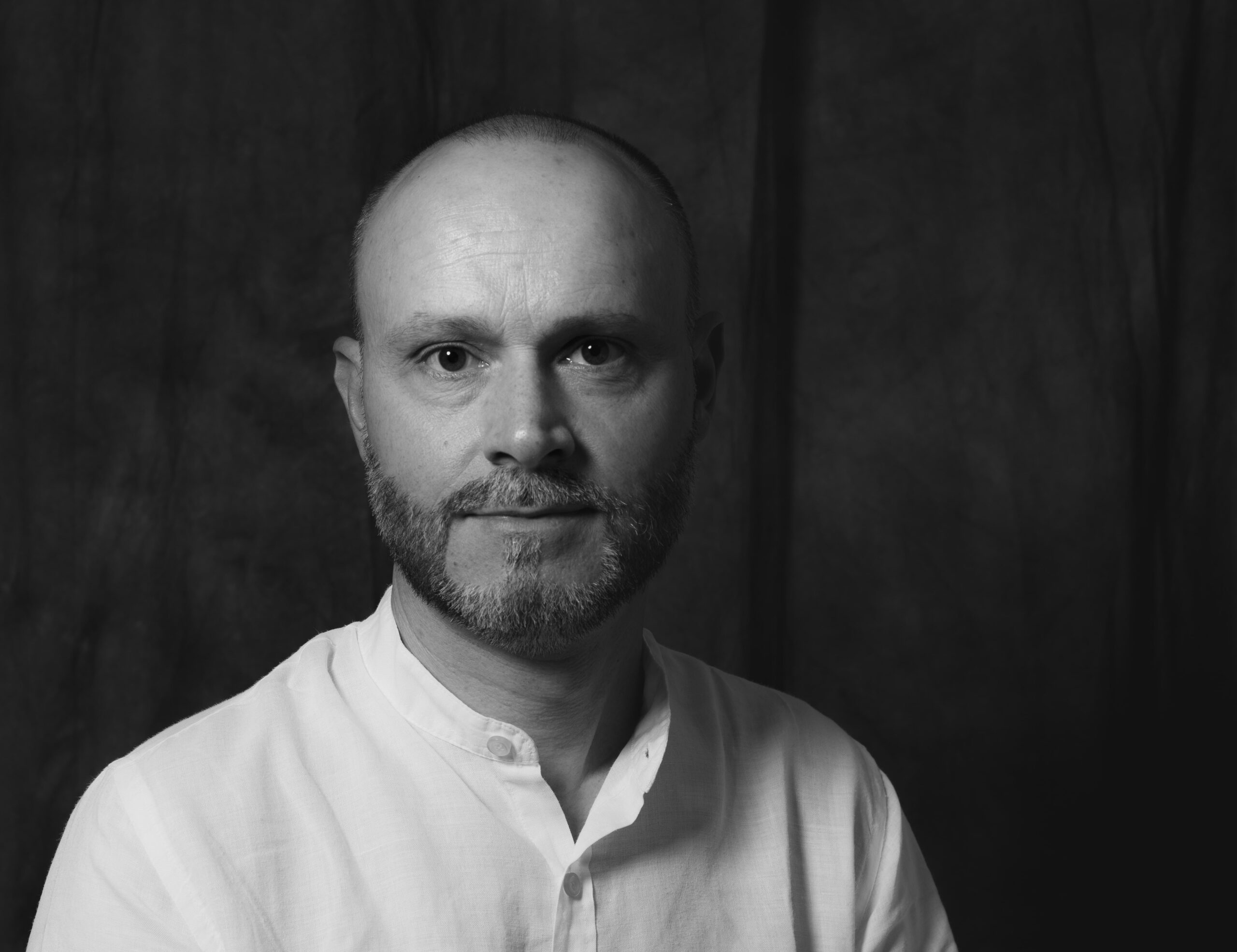
Davide Orsini holds a PhD in Anthropology & History and a certificate in Science, Technology, and Society (STS) from the University of Michigan, Ann Arbor. An anthropologist and historian of science and technology by training, Orsini has developed a semiotic approach to risk that pays attentions to the ways in which experts and non-experts build, share, and represent their underdstandings of health and environmental contamination. Davide is based at the Rachel Carson Center for Environment and Society, LMU Munich, as a Volkswagen Stiftung Change! Fellow and Principal Investigator of (Dis)Empowered Communities. Davide has been a Marie Skłodowska Curie Fellow at the Rachel Carson Center in the years 2021–23 and a Zurich-Munich Fellow in 2024. Before returning to the EU in 2021, he held the position of assistant professor in the History Department at Mississippi State University (USA), where he taught history of technology, European history, and STS courses. Orsini is the author of several articles published in international peer reviewed journals and of The Atomic Archipelago: US Nuclear Submarines and Technopolitics of Risk in Cold War Italy (Pittsburgh: University of Pittsburgh Press, 2022), 2023 finalist of the European Society for Environmental History Turku Book Prize.
Besides doing reserch, Davide loves fishing, dogs, well-told stories, and his hometown Orvieto, in Italy.
Full CV here.
The Nuclear Decommissioning Collaborative
is a U.S.-based nonprofit “clearinghouse” that brings together stakeholders—including communities, regulators, utilities, and policymakers—to share resources, best practices, and lessons learned for safely and effectively decommissioning nuclear power plants.
Our mission centers on enhancing collaboration, providing objective guidance, and supporting community revitalization during the cyclical transition from active plant operations through shut-down, closure, decommissioning then re-use.
more
more
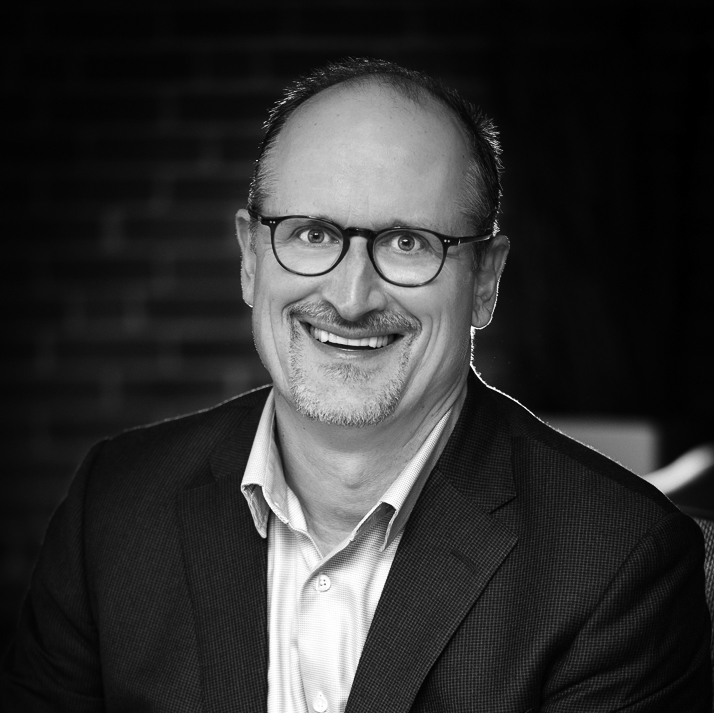
Jim Hamilton specializes in the socioeconomic, regulatory and public consultation aspects of large-scale energy infrastructure projects. At present, he is the Executive Director of the Nuclear Decommissioning Collaborative: In his work with the Collaborative, Jim helps local, state and federal stakeholders quantify, then mitigate, the socioeconomic impacts from commercial nuclear power plant closure. In parallel, The Collaborative works with host communities and utilities to plan for long-term economic resiliency in the energy transition arena. His focus areas include spent fuel storage systems, socioeconomic impact management, environmental justice, stakeholder engagement, economic development and creating local community hosting agreements. Jim earned undergraduate and graduate degrees from the University of British Columbia and MIT respectively.
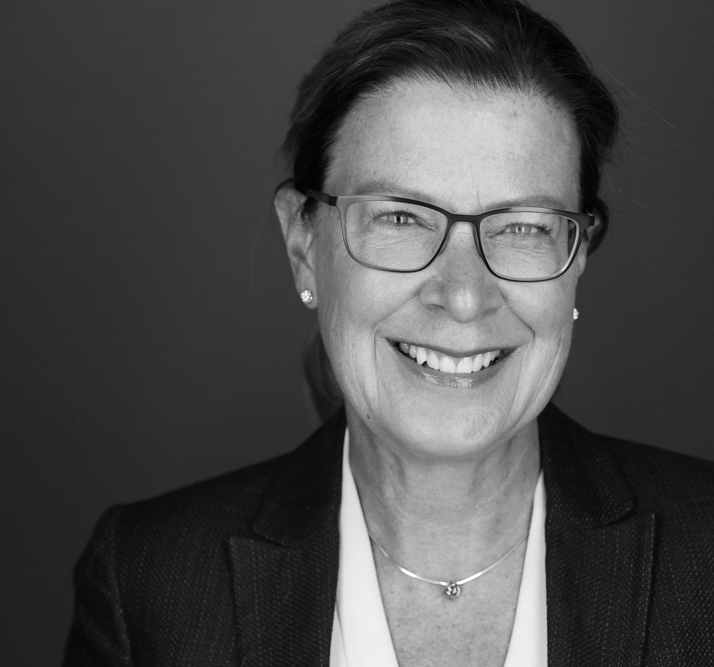
Through a wide range of planning and economic development experience and deep work in communities, Cindy Winland has a unique set of skills focused on the needs of rural and urban areas as they adapt to economic transitions that demand new solutions. Cindy’s work spans zoning and planning in the public sector, industrial and brownfield transition in the private sector, and assistance to tribal nations, legacy cities, and specifically coal impacted communities as part of a nonprofit. Complementing Cindy’s project work is a national perspective, honed mediation and facilitation skills, and expertise in community transitions – all with a distinct focus of promoting civil discourse, inclusive engagement, and executing planning solutions. Cindy holds a Master of Urban Planning degree and a Bachelor of Arts degree in Economics, both from the University of Michigan.
Büchner Filmproduktion
Büchner Filmproduktion was founded in 1995 by siblings Christiane Büchner and Tobias Büchner with the aim of realizing joint film projects.
Since 2008 we have also been producing films by directors of choice such as Dario Aguirre (“Five Ways to Dario”, „Land „of my children“), Thorsten Trimpop (“Furusato”), Sabine Herpich („Art comes from the Beak the Way it has grown“, „Barbara Morgernstern – Doing it for Love“) and Steffi Wurster (“RUKLA – Currently no Enemy in Sight“).
We are interested in stories that illustrate socially relevant topics on a personal level: “Family Business” sheds light on the trans-European market for domestic workers, in which time is exchanged for wages and families become a workplace. “pereSTROIKA – reCONSTRUCTION
of a flat“ describes the beginnings of the private real estate market after the collapse of the Soviet Union. “Furusato” observes how people in the Japanese district of Fukushima try to live with an invisible danger in their home after the nuclear disaster.
We believe in the narrative power of observation and in the exceptional in the ordinary. Every film is an affair by heart and a unique piece for which we take our time and develop an individual evaluation.
more
more
Coming soon
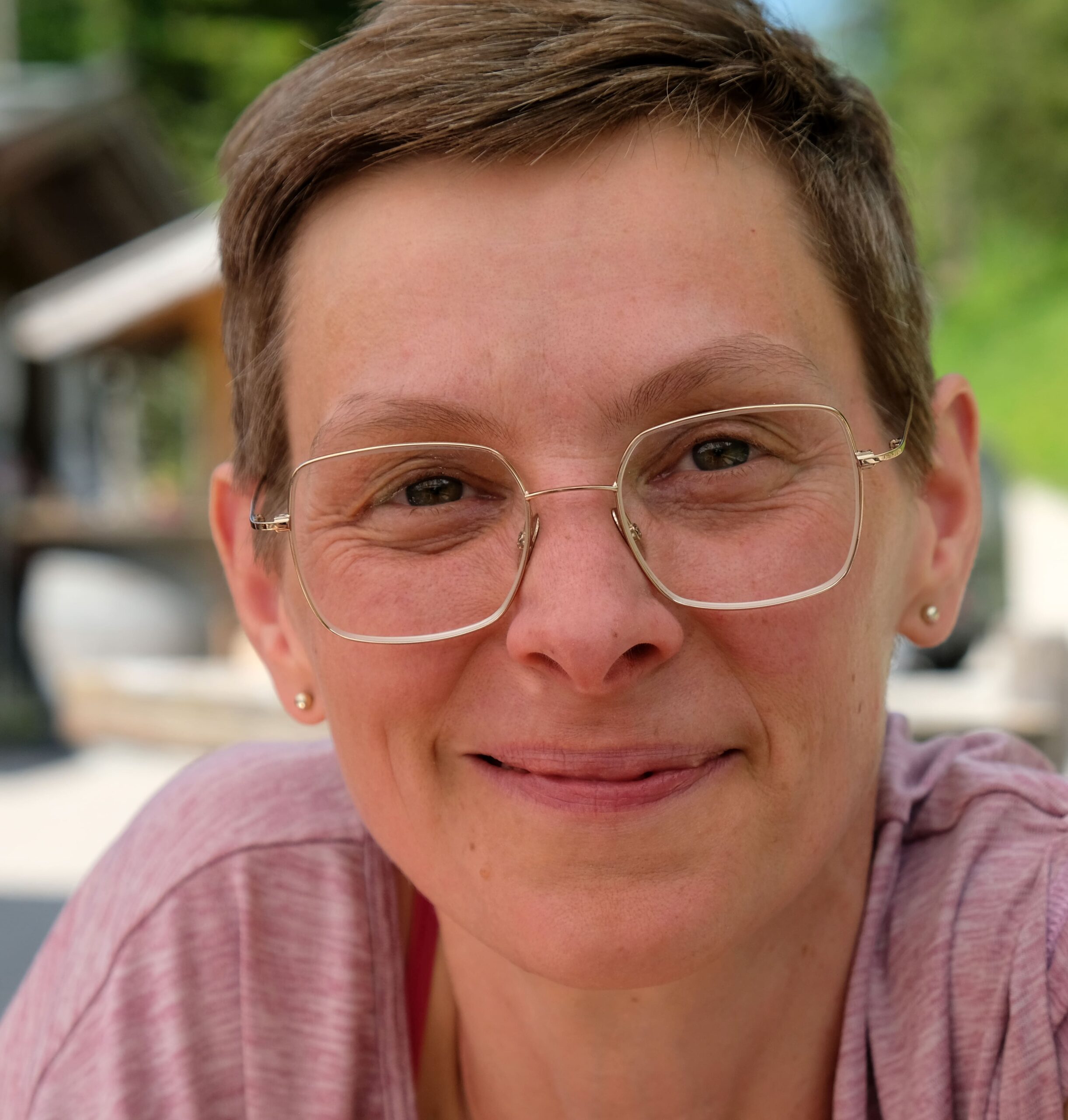
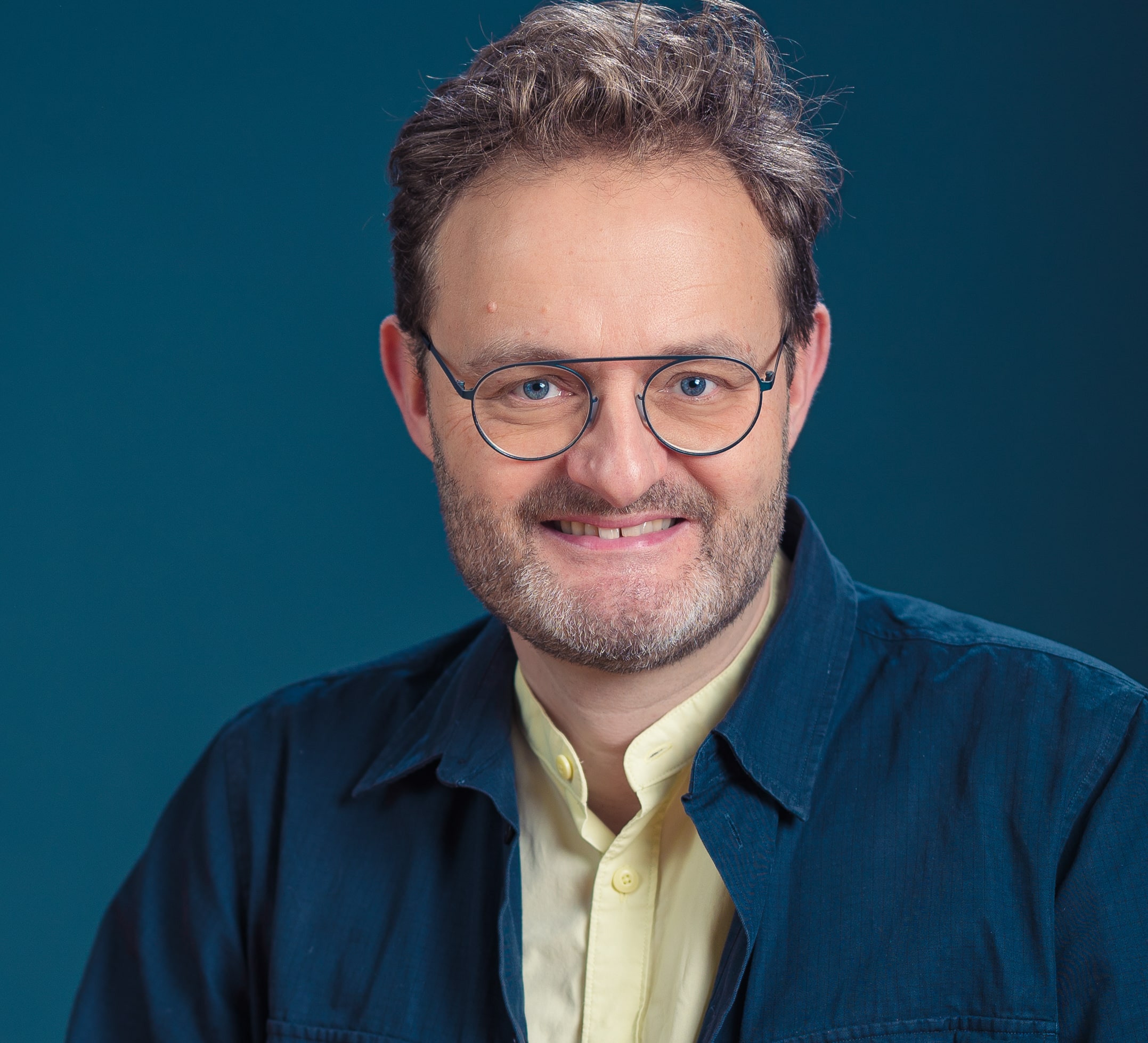
Tobias Büchner has been working as a producer of documentaries and feature films for over 25 years.
From 2000-06 he was a producer at Peter Stockhaus Filmproduktion in Hamburg and produced BUNGALOW (director: Ulrich Köhler), as well as the weekly short film magazine “Kurzschluss” on ARTE. Since 2007 he has been internal managing director at zero one film in Berlin. For Bayerischer Rundfunk and ARTE, Büchner developed the second-screen online format for the TV event “24h Jerusalem” for zero one film.
Büchner received the German Film Award in silver for the feature film 24 WEEKS (director: Anne Zohra Berrached) and has been a member of the German Film Academy ever since. Many of the documentaries he has produced are also characterized by the authors’ special signature style: FAMILY BUSINESS (director: Christiane Büchner, Film Award NRW “Best documentary” 2016), FURUSATO (director: Thorsten Trimpop, Golden Dove DOK Leipzig 2016) and KUNST KOMMT AUS DEM SCHNABEL WIE ER GEWACHSEN IST (director: Sabine Herpich, 3sat Documentary Film Award of the Duisburger Filmwoche 2021, dokKa Filmpreis 2022).
Tobias Büchner also teaches as part of teaching assignments in Berlin, Hamburg and Hildesheim, among others.
Studio Carmen Strzelecki
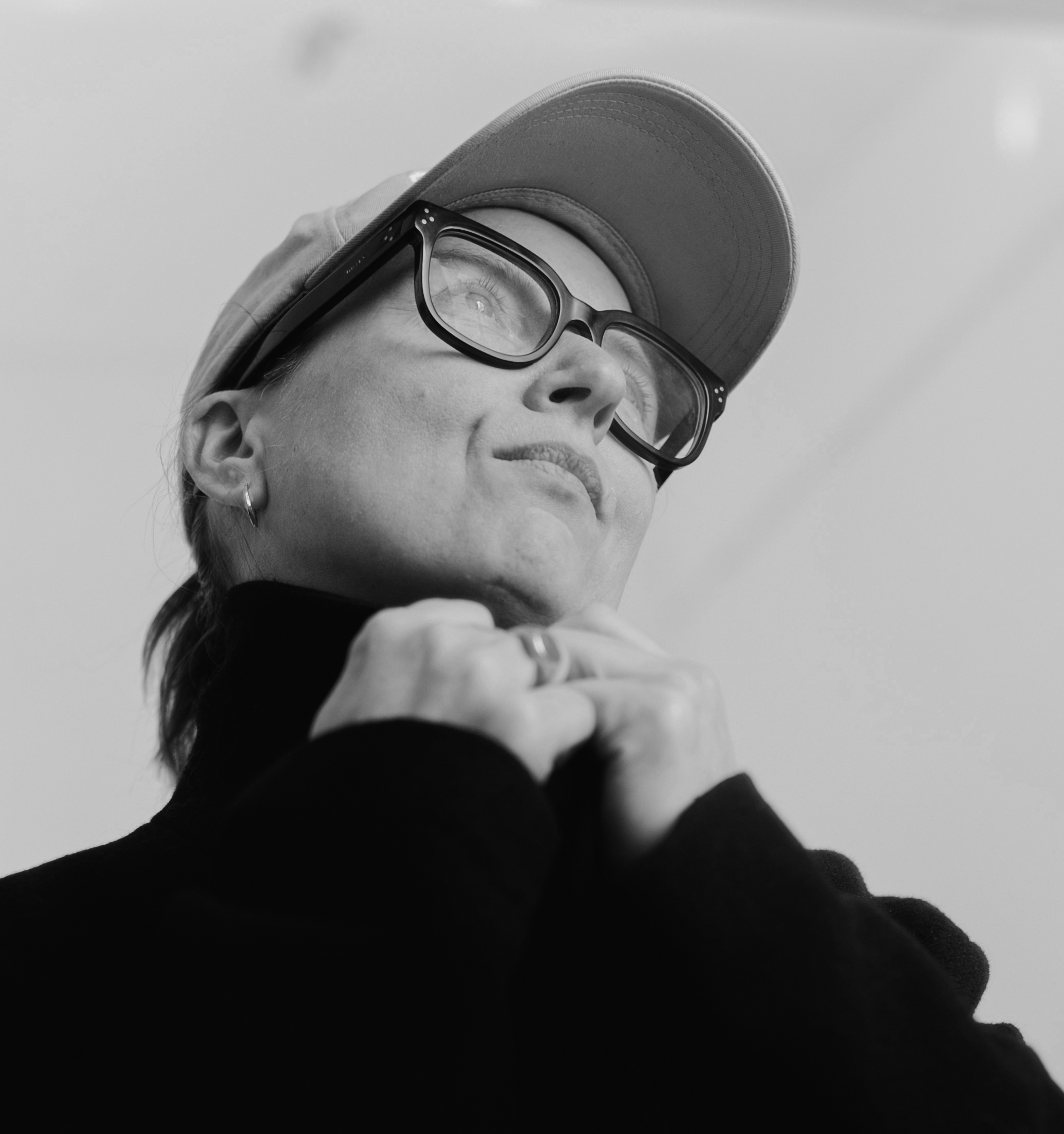
Founded in 1996 by Carmen Strzelecki in Cologne and expanded in 2009 with the publishing house StrzeleckiBooks, the Carmen Strzelecki graphic studio has become a major player in the arts and culture sector.
The studio focuses on the conception and design of print and online communication campaigns for cultural institutions, artists, galleries, and festivals. It employs three permanent staff members and has a long-standing, cultivated network of freelancers, ensuring coverage of all areas of print and web design.
more
Coming soon
 NUCLEARDECOM